Wednesday, December 2, 2015

Bring Leatherbacks to the Forefront

Bring Leatherbacks to the Forefront

By: Cassie Stevenson


Description and Ecology

            Among all living Sea Turtles, Leatherbacks are the largest. The unique nature of their skeleton made it so they were classified in a separate family, Dermochelyidae, unlike other existing species of sea turtles, who are a part of the Cheloniidae family. Contrary to most turtles, whose shells consist of bony plates, leatherbacks have rubber-like shells that allow for further mobility. Other differentiating features of leatherbacks are that their internal body temperatures tend to be a few degrees above the temperature of the water they’re immersed in, and a considerable extent of their skeleton consists of cartilage. Furthermore, adult Leatherbacks are known to be exceptionally migratory. The habitat of hatchlings remains unknown. Female Leatherbacks prefer clear beaches such as those found among continental shorelines. As for their diet, Leatherbacks eat primarily jellyfish along with various other soft bodied creatures. (National Marine Fisheries Service)   

Listing Date and Type of Listing

Leatherback Sea Turtles have been listed as an endangered species under the Endangered Species Act since June 2, 1970. (National Marine Fisheries Service)
 

 Geographic and Population Changes

 
            The listing of the Leatherback Sea Turtle is in direct response to changes in their geographic range and population. Leatherback Sea Turtles have had a wide geographic range. From Alaska to Southern Africa, Leatherbacks have been spotted. However, it has been estimated that less than 2,300 of adult females currently roam the Pacific. In 1982, the global population was once estimated to be 115,000 female adults. Their population was then downsized to roughly 35,000 by 1996. In the Pacific and Indian Oceans, population declines have been intense. For instance, one nesting site in Malaysia went from having more than 3,000 females in 1968, then down to 20 in 1993, then to a meager 2 females in 1993. (World Wide Fund For Nature) Areas that were once home to clumps of nests have experienced a massive decline. Another cause for concern is the inconsistent number of nests. Nest populations can fluctuate as much as 4 to 81 in Palm Beach Florida and 4 to 60 on the Caribbean islands of Martin and St. Lucia, or as little as 0 to 1 in Indian River County Florida. (National Marine Fisheries Service)

Main Threats

            Some of the most harmful threats to the nesting environment of Leatherbacks are beach nourishment, increased human presence, and hatchling mortality. Beach nourishment refers to the manipulation of sand concentrations by humans. This management can result in an elevation of sand compaction or even the introduction of a different type of sand. This, in turn, causes a disruption of the Leatherback’s normal nesting conditions, both after the changes, and as the changes are being commenced. The presence of humans on nesting beaches can both influence the behavior of a nesting female
Leatherback and disorient her hatchlings. Female Leatherbacks are encouraged to nest elsewhere in sometimes less optimal locations for nesting. Human activities such as campfires can disturb hatchlings and disrupt their exit from
the nest. A large amount of Leatherbacks don’t even leave the nest. Some hatchlings succumb to the obstruction of roots within or above their nests. As they journey beyond their nests, some are distracted by artificial lighting or disregarded debris. Others are preyed upon by eagerly awaiting predators as they crawl toward the water. Once in the water, hatchlings are still subjected to risks. The main threats to Leatherback’s marine environment include entanglement at sea, ingestion of marine debris, and commercial fisheries. A fair amount of Leatherbacks become entangled in fishing lines and various other fishing traps resulting in them drowning. It has been reported that up to 89% of stranded
Leatherbacks in Cape Cod Bay were the result of entanglement as well 70% of Leatherbacks found by Newfoundland and Labrador coasts. They often mistake debris such as plastic bags for prey. The ingestion of abiotic items can interfere with normal functions of the gut, allow for the integration of toxic byproducts, and diminish the uptake of vital nutrients. Debris ingestion has been seen in almost half of the Leatherbacks whose stomachs have been examined worldwide. The offshore commercial shrimp fleet kills ¼ of the roughly 640 captured leatherbacks due to drowning while another portion of the sea turtles are likely injured as the capturers struggle to get them back into the water.    
(National Marine Fisheries Service)


Description of Recovery Plan

            The recovery objectives for the Leatherback Sea Turtle include female populations increasing by at least 25% based on statistical evidence and placing nesting habitats that cover 75% of nesting activity in the U.S. Virgin Islands, Florida, and Puerto Rico into public ownership. The recovery plan strives to protect and manage habitats mainly by regulating coastal construction and various other activities that could manipulate and degrade the natural environment.  In order to protect and manage populations, the plan calls for regulations to be put in place to minimize human related threats as well as for data to be collected in order to direct effective action against threats that are not yet well understood. The education of the public and cooperation of other nations are intended to be achieved by distributing information regarding the plights of Leatherback Sea Turtles and developing international agreements meant to secure their protection. (National Marine Fisheries Service)

Personal Action
 
For more information on Leatherback Sea Turtle, visit


If you’d like to donate, log onto

wwf.panda.org. 

Sources

"Leatherback Turtle." WWF. World Wide Fund For Nature, 2015. Web. 2 Dec. 2015.

"Recovery Plan for Leatherback Turtles in the U.S. Caribbean, Atlantic and Gulf of Mexico." Marine Fisheries Service and U.S. Fish and Wildlife Service, National Marine Fisheries Service, Washington, D.C., 1992. Web. 2 Dec. 2015.


The Florida Panther

By Kevin Sun
Bio 227

https://www.geocaching.com/seek/cache_details.aspx?
wp=GC4JY3C&title=dwt-florida-panther&guid=0d5119e6-1bd5-4df0-a965-6fa893fcb66f

Ecology/Description
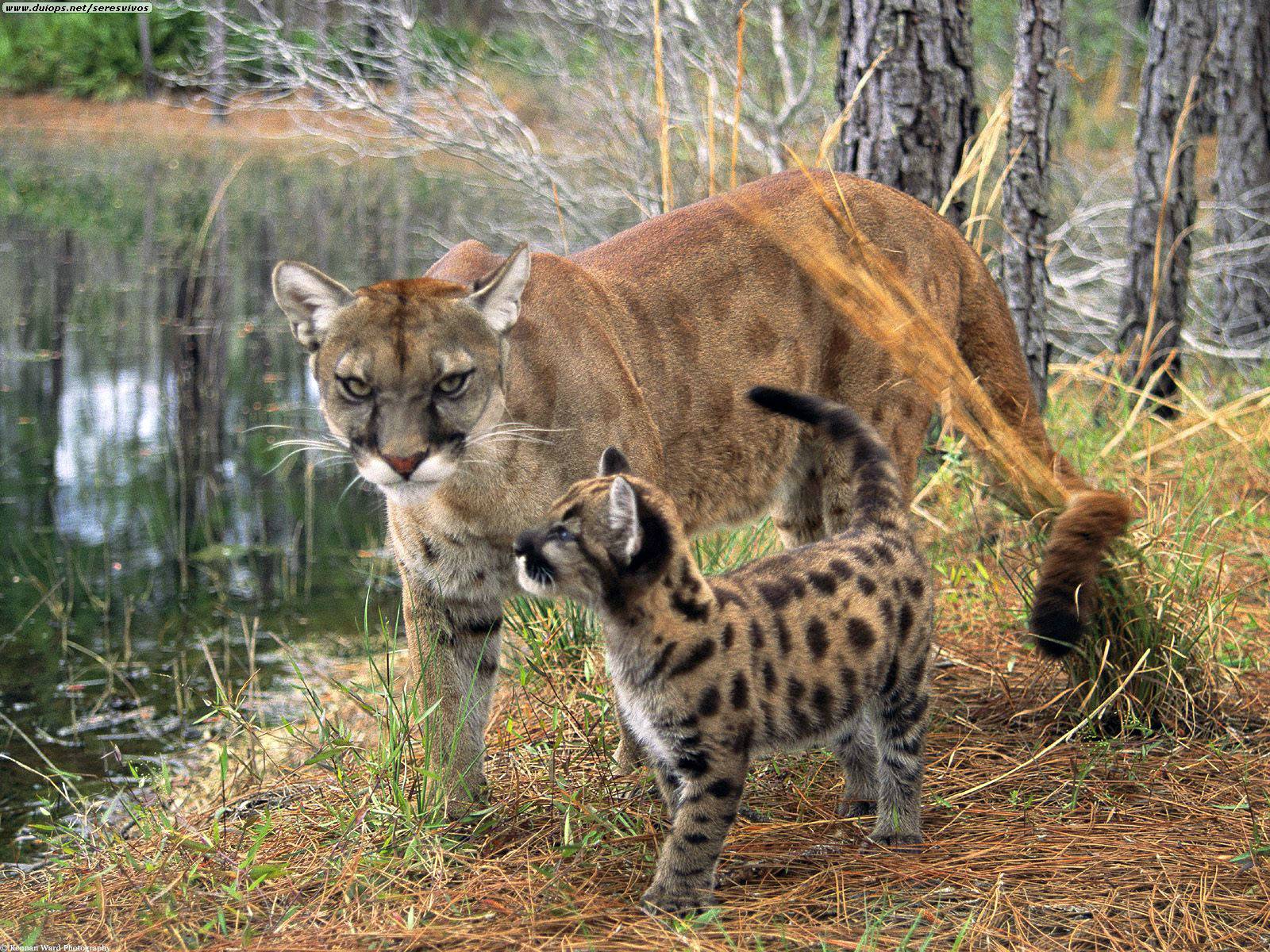
The puma concolor coryi, more commonly known as the Florida panther, is a carnivorous species that can be found roaming in both the wet swamps and dry forests of Southern Florida. Its preferred habitat is the forest. The territorial Florida panther is a subspecies of cougar unique to the South-East of America and has adapted to its tropical climate. When not feasting on its primary preys the feral hog and the white-tailed deer, the Florida panther spends the majority utilizing its forest habitat hiding and is seldom seen in the wild. Adult Florida panthers are known to grow up to 7 feet long and can weigh up to 160 lbs. Aside from its white stomach, the feline possesses a beige coat of fur with small portions of black highlighting its pointed ears, round snout, and lengthy tail. Unique to its subspecies, the Florida panther can be distinguished from other subspecies of cougar by its crooked tail and nonconforming patch of hair on the back.  The lifespan of a Florida panther averages to 12 years, however, many Florida panthers do not live to this age due to a lack of genetic diversity. The Florida panther is classified as a generalist species and are K-strategists. When giving birth, the Florida panther ranges from 1 to 4 kittens and will remain with their mother for 2 years.

Habitat of the Florida panther
http://www.arkive.org/puma/puma-concolor/image-G5700.html

Panther kitten
https://flypanther.files.wordpress.com/2013/09/babypanther.jpg

Geographic and Population Changes
Once a species highly plentiful in the early 1600 has now only a small population of 100 to 180 Florida panthers. The introduction of agriculture and city development have greatly modified the home of the Florida panther. An increase in the clear-cutting of forests have destroyed the very forests that offer the Florida panther protection and shelter. The Florida panther's current population size has shown a noticeable increase since its population of 12 - 20 recorded in the 1970s.

Habitat zones of the Florida Panther
https://upload.wikimedia.org/wikipedia/commons/f/f9/FloridaPantherHabitat.png

Listing
With a immensely low population of 12 - 20, the Florida panther was listed on the endangered species act on 03/11/1967 by the U.S. Fish and Wildlife Service. Listed as an endangered species, the Florida panther has remained on the list since its firsts listing. The status of the Florida panther has also remained unchanged. Protection of the Florida panther is enforced everywhere the species can be found.


Logo of U.S. Fish and Wildlife Services
http://oklahomafarmreport.com/wire/news/2011/06/media/01757_us-fish-and-wildlife_logo.jpg


Causes of Listing and Main Threats 
The poor condition of the current population of the Florida panther is contributed heavily by habitat destruction and health issues. The causes of the subspecies' poor health can be traced to its low existing population, causing low genetic diversity and susceptibility to disease. Low genetic diversity is a result of inbreeding which has also lowered sperm quality, ultimately leading to a lower fertility rate. In a Florida panther biomedical investigation conducted by M.E. Roelke, it is concluded that the Florida panther has lost half of its genetic diversity due to low heterozygosity levels. The Florida panther is victim to mercury poison in areas around Everglade. It is believed to affect panthers who have preyed on raccoons who posses high amounts mercury from bioaccumulation of aquatic animals. The rising population of Florida has already peaked 17 million people and has prompted the need of urbanization. In order to sustain a population, area for agriculture must be added. In doing so, natural habitats that one thrived in Florida are being undermined. Urbanization and agriculture expansion has resulted in converting natural habitat into urban areas of settlement. Highways and cities have fragmented existing habitats, thus weakening the ecosystem the Florida panther resides in. Hunting of the feline before the 1900's greatly reduced the population as well. Farmers were fearful of the both the Florida panther itself as well as its potential to cause damage to livestock.


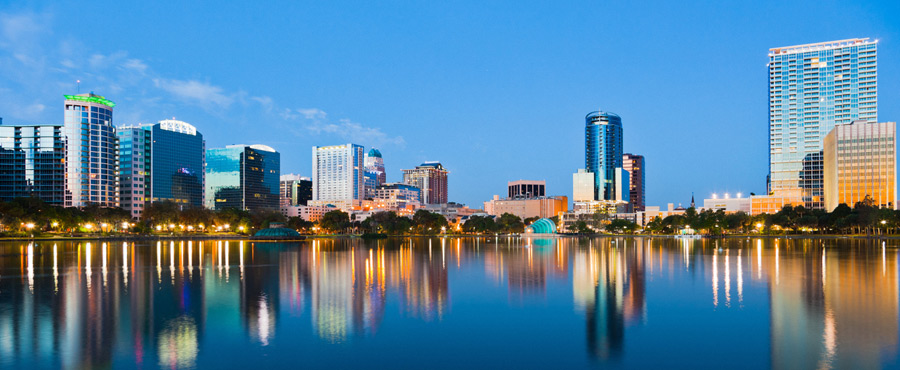
Orlando, Florida
Demonstration of Urbanization
http://www.monsterdisplays.com/v/vspfiles/assets/images/orlando-fla.jpg

Recovery Plan
The goal of the recovery plan assigned to the Florida panther is to achieve a self-sustaining population of the subspecies. The plan further aims to expand the panther's habitat to areas beyond south Florida and educate the public about the Florida panther. A healthy, self-sustaining population of the Florida panther is achieved when the population has a 95% of persistence for the following 100 years according to the US Fish and Wildlife Services. In order to achieve such results, habitat conservation and reduction of habitat related threats are the center of focus.  To reduce the amount of deaths caused by cars, fences will be installed around key areas along highways to prevent the endangerment of motor vehicles. A group of southern Florida land managers will be assembled to make enforce habitat management. The knowledge and understanding of the subspecies is key to the recovery of the Florida panther. The local people who share land with the Florida panther must understand the importance of the animal. The people must know that there is a problem and that their cooperation is necessary to save the Florida panther.  It is important to focus on saving the ecosystem that the Florida panther lives in as well for doing so will benefit other species who share a habitat with the Florida panther.

Personal Action
I will personally educate the family and local people in my community about the endangered status of the Florida panther. I hope that this blog can reach the people who are more directly connected to the Florida panther. The first and most important step is acknowledging there is an issue and educating others so that they can contribute to the recovery of the Florida panther. I will share my blog amongst forums and social media. I will also implement a hashtag so those who have questions regarding the panther can contact me as well as share their thoughts on the issues.

Work Cited
"Basic Facts About Florida Panthers." Defenders of Wildlife. N.p., 21 Mar. 2012. Web. 20 Nov. 2015. <http://www.defenders.org/florida-panther/basic-facts>.

"FLORIDA PANTHER." FLORIDA PANTHER. N.p., n.d. Web. 21 Nov. 2015. <http://www.floridapanther.com/articles/FLORIDA%20PANTHER.htm>.

"Florida Panther - Florida Panther - U.S. Fish and Wildlife Service." Florida Panther - Florida Panther - U.S. Fish and Wildlife Service. N.p., n.d. Web. 20 Nov. 2015. <http://www.fws.gov/refuge/florida_panther/wah/panther.html>.

Roelke, M.E. 1990. Florida panther biomedical investigations. Final performance report, July 1, 1986 to June 30, 1990, study no. 7506. Florida Game and Fresh Water Fish Commission; Tallahassee, Florida

The Florida Panther. Florida: Florida Power & Light, 1992. U.S. Fish and Wildlife Service. Web. 20           Nov.2015. <http://ecos.fws.gov/tess_public/profile/speciesProfile?spcode=A008>


Tuesday, December 1, 2015

West Indian Manatee
By Austin Soto
Dog of the Sea?
Sometimes referred to as the “Dog of the Sea,” the West Indian Manatee sure looks like it could just nuzzle up to you like any fun loving dog would on dry land! But there’s much more to this amazing, tender creature than you could imagine that you will soon find out! This informative blog is dedicated to all those manatees out there and to the efforts to conserve this threatened species for generations to come.
*Throughout this blog, the West Indian Manatee will be abbreviated as WIM*
The West Indian Manatee Family
The West Indian Manatee (Trichechus manatus latirostris) is a member of the aquatic animal order Sirenia, which consist of herbivorous aquatic mammals that live in swamps, lakes, rivers, estuaries, and coastal waters. The WIM is one of only four species of Sirenia, with its family members consisting of the West African Manatee, the Amazonian Manatee, and the Dugong. A fifth member, the Steller’s Sea Cow, was hunted to extinction in the mid-1700s. The WIM itself has two subspecies, the Florida Manatee and the Antillean Manatee.

What exactly is the West Indian Manatee?
Fun Fact: Did you know that sailors sometimes mistook the WIM for mermaids back in the day before they knew what the WIM was? Maybe because from afar, the shape and characteristics of the WIM do appear somewhat like the image of a mermaid (convince yourself it does)!


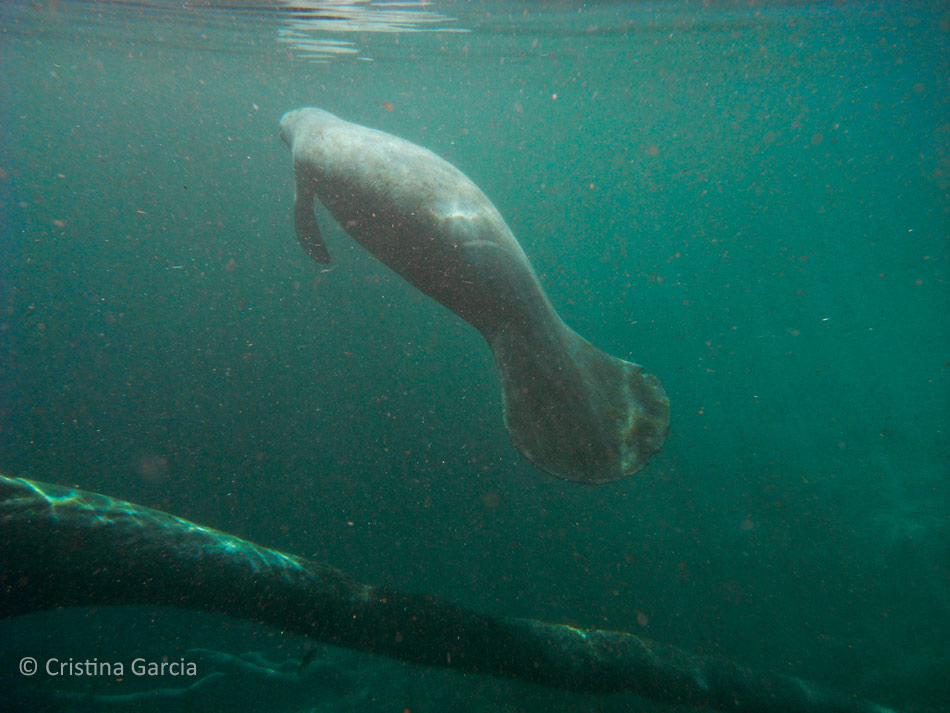
The WIM has a large, grayish, round body with a large, rounded tail to help it propel through the water. It also has a pair forelimbs, called flippers, located on both sides of the sides of the body to help it steer and move around. The head of the manatee has a wrinkled look, with a squashed nose that has whiskers protruding from it. The average adult WIM grows to about 10 feet or so, and weighs between 800 and 1,200 pounds. The baby calves themselves are also large, averaging around 3 feet at birth and weighing around 50 pounds.
Where does the West Indian Manatee call home?
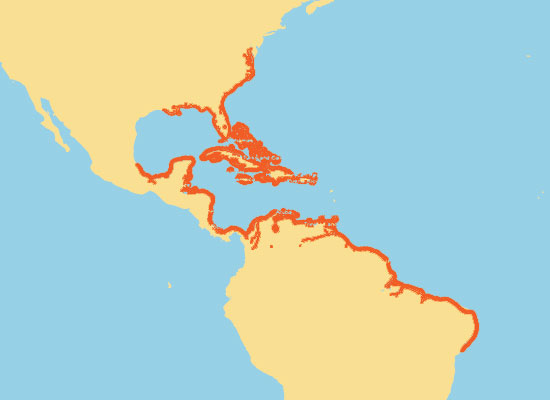
The WIM is found primarily in the shallow, calm waters of rivers, bays, estuaries, swamps, and coastal shores of Florida, the Gulf of Mexico, and surrounding Caribbean waters down extending to South America. The coastal areas outlined in orange on the map provide a visual guide to where the WIM lives. However, they have been found as far north as Rhode Island and as far west as Texas, although this is rare. The WIM prefers freshwater environments, but can survive in saltwater as well. And speaking of the kind of water they like, the WIM cannot tolerate water that dips below 68 degrees Fahrenheit, as their digestive tracts begin to shut down due to their slow metabolism and little insulating body fat, and can possibly result in death. This is why they prefer the ideal warm waters of Florida and the Caribbean.
What is the West Indian Manatee diet like?
What does the WIM eat for its daily diet? It mainly feeds on aquatic plants such as turtle grass, shoal grass, and algae. They prefer to eat submerged vegetation, followed by vegetation that is floating on the surface of the water. However, they have been known to eat some small fish as well. The WIM consumes from around 4% to 9% of its body weight each day through its meals. All that eating must be quite nutritious to the WIM, helping it survive to an estimated 60 years of age. No other animal has the WIM in its diet, therefore it has no natural predators or documented predations from other animals!
What are the reproduction and breeding habits of the West Indian Manatee?
The WIM has a naturally low reproduction rate, producing an average of one baby manatee every two to five years, and though it is rare, sometimes twins are produced. The gestation period for the female manatee is about one year, and once born, the calf stays close to and depends on its mother for survival for about a year or two before becoming more independent. Female manatees become sexually mature anywhere from three to ten years of age, and usually attract several bull (male) manatees for mating purposes, often leading to competition between the bull manatees to see who gets to mate with the female first.
How does the West Indian Manatee behave?
The WIM is not going to attack you anytime soon. It is naturally a very passive, non-aggressive, slow-moving fellow, only swimming around 3-5 miles per hour on average. They spend most of their time underwater, just under the surface of the water. However, they do surface to breathe, and they can hold their breath for an average of 4 to 5 minutes underwater. The WIM spends most of its time feeding, resting, and traveling. They do, however, like to socialize with other manatees, nuzzling up to each other or playing follow the leader! Most of the time, manatees casually join other manatees and disburse from them as they wish. They temporarily just “hang out.” There is no given number to the size, age, or sex or manatees that could congregate at any given point. However, the basic social unit of the WIM is just simply the mother and the calf.
How long do West Indian Manatees live, and what are the threats to it?
The average lifespan of the WIM is a healthy 50-60 years of age. However, there are many factors, mainly natural and human, that cause the deaths of these creatures. Natural causes may be due to coldness of the water as mentioned previously, disease, and of old age. Human causes include poaching, entanglement in fishing nets, boating collisions, pollution, habitat destruction, and crushing from flood gates. However, boat-related accidents and the loss of their warm water habitat are the top overall causes of manatee deaths, with 25% of manatee deaths directly attributable to the incidents involving boats. The wounds from boat propellers and boat collisions leave the manatees severely injured, and they may die from the blunt trauma afterwards. The loss of their habitat, in the form of clearing the marshes, swamps, and low-lying areas of water, leave the manatees to flee to inhospitable waters that they cannot tolerate, and they may die as a result. Many of the sea grasses the manatees feed on are also lost through boating activities and dredging, leaving the manatees with less food and it may lead to starvation.
Recovery Plan of West Indian Manatees
Oh no - the West Indian Manatee is endangered! It was first listed in 1967, but thankfully, there is a recovery plan for the Florida Manatee(essentially the West Indian Manatee that lives around the coastal areas of Florida and the Caribbean and encompasses a large proportion of the habitat of the West Indian Manatee). The main goal of the plan is to make sure that the long term survival of the Florida manatee in the wild is sustained, and that one day it can be downlisted to threatened and eventually de-listed altogether. By reducing threats, both natural and human caused, and also achieving population benchmarks in the regions where the manatees live, where the average rate of survival of manatees is to be 90% or higher, we can ensure the long-term survival of the manatee. Some examples of reducing threats include protecting warm water habitats of the manatee, reduce the unauthorized human “take” of manatees, building manatee-safe dams and canal locks, and allowing less boats in the areas where manatees live. The current Florida manatee population is at 1,865 individuals, and hopefully many more will be out in the wild in the long run with the help of the recovery plan.
Personal Action Plan
One of the most effective actions you can take to save the manatees is to spread the word about manatees and their conservation status, and get people to notice and support actions that save the manatees. You can donate to programs such as Save the Manatee Club and the National Wildlife Federation that help protect the habitat of manatees and ensure their survival in the wild. You can even adopt a manatee at http://www.savethemanatee.org/ and be a partial owner of a manatee, with proceeds going to helping conserve manatees! If you ever find yourself in a manatee habitat, remember to respect them and the surrounding wildlife by not littering and looking after yourself. Hopefully one day, with your help, the West Indian Manatee will be self-sustaining, thriving population that future generations will be able to enjoy for years to come.
 
Works Cited
Deutsch, C.J., Self-Sullivan, C. & Mignucci-Giannoni, A. 2008. Trichechus manatus.
The IUCN Red List of Threatened Species 2008. Web. 28 November 2015.


"Florida Manatee Recovery Plan." U.S. Fish and Wildlife Service (2001): n. pag.
Environmental Conservation FWS. U.S. Fish and Wildlife Service, 30 Oct. 2001. Web. 29 Nov. 2015.


"Manatee Information." Manatee Information. Save the Manatee Club, n.d. Web. 23 Nov. 2015.


"West Indian Manatee." National Wildlife Federation, n.d. Web. 22 Nov. 2015.

"West Indian Manatee: Species Profile." Everglades National Park. National Park Service, n.d. Web. 23 Nov. 2015.

Sunday, November 29, 2015

Save the West Indian Manatee

By: Andrew Stratford

Ecology/ Description
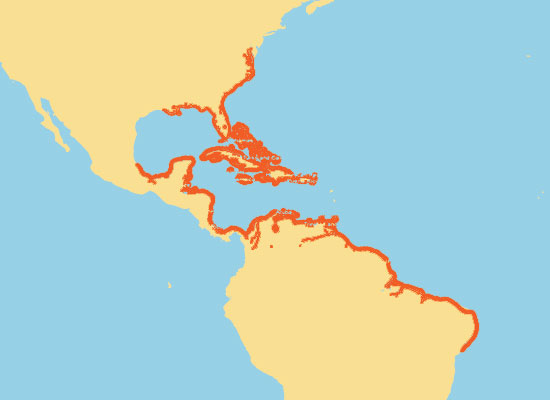
The West Indian Manatee (Trichechus manatus) sometimes known as the "sea cow" is one of four known living species of the aquatic mammal order Sirenia. There are two subspecies of the West Indian Manatee: the Florida Manatee and the Antillean Manatee. Both are very similar except that the Florida Manatee is generally larger. The average adult manatee is around 10 feet long and weighs anywhere from 800 to 1,200 pounds. Their wrinkled skin is usually gray and is covered with vibrissae, tiny hairs which help them touch and navigate. They have large, seal-like bodies, paired flippers, and a round tail. Each flipper has three to four nails and their tails are paddle-shaped. They spend most of their time underwater and can go as long as 12 minutes underwater in one breath, however the average is around 4 minutes. Manatees consume submerged and floating plant life as well as some small fish and vertebrates. They spend around 5-8 hours a day eating. Florida Manatees can be found in estuaries, freshwater rivers, and in the coastal waters of the Gulf of Mexico and the Atlantic Ocean near Florida and the Caribbean. Antillean Manatees can be found in the same areas as well as the Caribbean coasts of Central America and in northern South America. 

West Indian Manatee range

Listing
West Indian Manatees have no known natural predators and so have the ability to live to nearly 60 years of age. It is unlikely, however, that most manatees will reach this age because of limiting factors. These factors include but are not limited to watercraft collisions, gatelock, loss of warm water habitat, red tide blooms, pollutants in food supply, and entanglement in fishing gear. These threats can cause and do continue to cause declines in reproductive rates, survival rates, and the carrying capacity of the ecosystem. Manatees are considered vulnerable by the Red List for Endangered Species but are considered by most to be endangered. They were labeled as endangered in 1967 under a law that preceded the Endangered Species Act of 1973. Their continued survival is limited due to their low reproductive rates. 

Graph of Manatee mortality rate in Florida
Recovery Plan
The goal of the recovery plan is to allow for the long term success of the Florida manatee in the wild. Along with this comes the goal of reclassifying the manatee from endangered to threatened status and eventually removing it from the List of Endangered and Threatened Wildlife. The main conservation efforts of the recovery plan include maintaining minimum spring flows, protecting warm-water refuge sites, protecting foraging habitat in the refuge sites, and reducing unauthorized human- caused take (boat strikes, navigation lock, pollutants). To prevent boat strikes, the highest cause of mortality, they create manatee protection zones throughout the rivers and bays. They also enforce manatee protection speed zone rules to limit collisions. To prevent entrapment in water control centers and in locks, openings in locks are made wide enough for manatees to fit through. Pressure sensor devices are also installed to detect when manatees enter these facilities so that they can be safely let out. Acoustic sensors are also developed to close locks before the manatees can enter them and be entrapped. To prevent ill effects of coastal development along the coast of Florida strict permits are established so that manatee habitat will not be altered or destroyed. Land may also be acquired so that manatee habitat can remain where it is and remain a safe zone.The plan as a whole will hopefully ensure a healthy existence of manatees in and around Florida by lessening and eliminating these threats and limiting factors. To be properly declassified to threatened status, the annual rate of adult survival must be at least 90% and the average annual percentage of adult females with calves in the winter must be at least 40%. It all takes time, but through these efforts, eventually the West Indian Manatee will sustain a healthy, safe population.


Manatee sanctuary
Personal Action
If there is one thing that every citizen should know it is that there is always something that can be done to help. It is true, there are hundreds of different species of plant and animal life that are endangered or threatened. It can seem overwhelming or impossible to tackle such a seemingly daunting task. It is the efforts of the lone individual, however, that can have the most impact and effect in the end. The West Indian Manatee is an important part of the ecosystem around Florida and it must be saved. Boaters in the area need to take it upon themselves to slow down and be cautious in areas where manatees are present. People also can become informed about the issue and the circumstances surrounding the manatees and teach others around them. Becoming aware of the problem is very important and by alerting other people about it too, that is a huge help. Volunteering to help create sanctuaries or rescue manatees is another thing we all can do to help support the species as a whole. To learn more about opportunities to help the West Indian Manatee or to learn more about the species in general visit savethemanatee.org

The good news is that it isn’t too late yet and also that it doesn’t take a huge amount of change to help out. Small actions taken by individuals are the impetus for a worldwide change.


Works Cited
Florida Manatee. Digital image. Defenders. Defenders, n.d. Web. 29 Nov. 2015. 
"Florida Manatee Recovery Plan." U.S. Fish and Wildlife Service (2001): n. pag. Environmental Conservation FWS. U.S. Fish and Wildlife Service, 30 Oct. 2001. Web. 29 Nov. 2015. 
"Manatee Facts." Save the Manatee. Save the Manatee Club Inc., n.d. Web. 29 Nov. 2015. 
Report Template. Digital image. Florida Fish and Wildlife Institute. FFWI, n.d. Web. 29 Nov. 2015. 
Sonya, Karen. These Are West Indian Manatees. Digital image. Epubbub. Epubhub, n.d. Web. 29 Nov. 2015. 
West Indian Manatee. Digital image. National Geographic Kids. National Geographic, n.d. Web. 29 Nov. 2015. 
"West Indian Manatee." National Wildlife Federation. National Wildlife Federation, n.d. Web. 29 Nov. 2015.